Sunday, January 15, 2006

Feinstein Warns Against Alito Filibuster

By HOPE YEN, Associated Press Writer 1 hour, 28 minutes ago
WASHINGTON - A Democrat who plans to vote against Samuel Alito sided on Sunday with a Republican colleague on the Senate Judiciary Committee in cautioning against a filibuster of the Supreme Court nominee.

"I do not see a likelihood of a filibuster," said Sen. Dianne Feinstein (news, bio, voting record), D-Calif. "This might be a man I disagree with, but it doesn't mean he shouldn't be on the court."


Wow. I don't often comment on current events or politics, because it doesn't really matter. Nothing will change about our illegitimate and corrupt federal government through day-to-day politicking. A true counter-revolution, in some form or another, is the only real hope. We may not involve masses of men in blue bonnets with white cockades (sigh), but something out-of-the-ordinary has to happen.

Anyways, I digress. I'm noting this article because it's nice to see lefties being complacent and giving up. The 1960s are a longtime gone, eh? It's hard to fight to the death on something, when you have no first principles, and no hope of life thereafter.

Isn't it Dianne?

SNAP email

I now have 46 emails in my "SNAPCRAP" folder in Yahoo mail. I've only read a couple, but I do have to get to that post I've been promising for weeks sometime.

Saturday, January 14, 2006

End of the tour in sight.

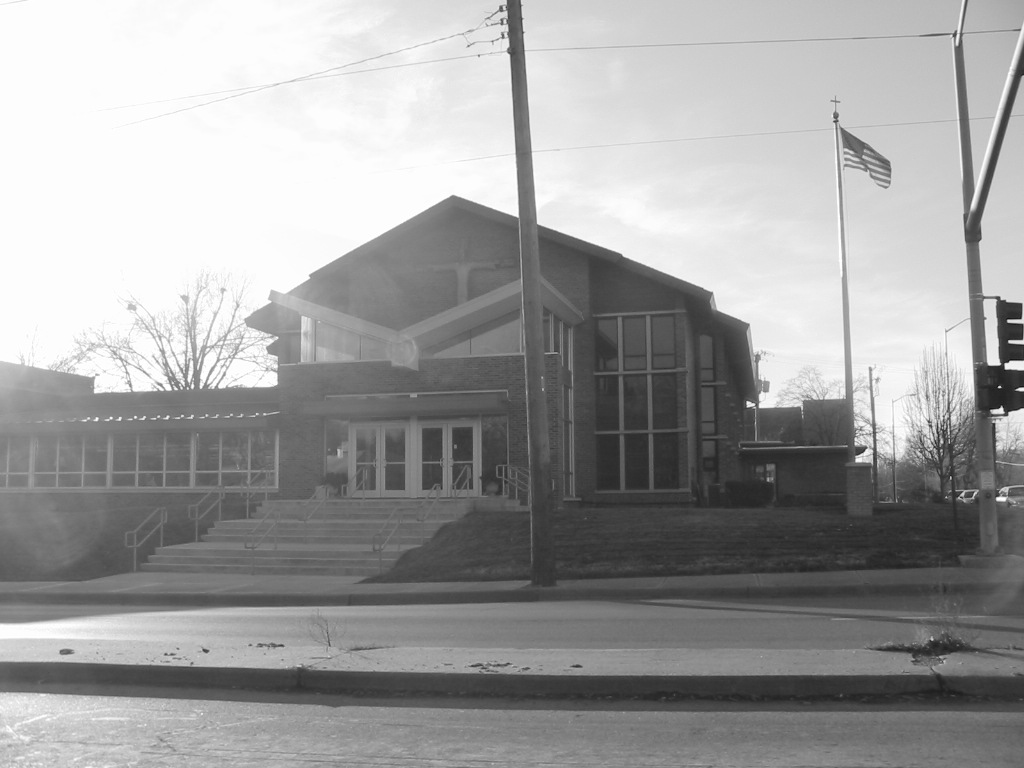
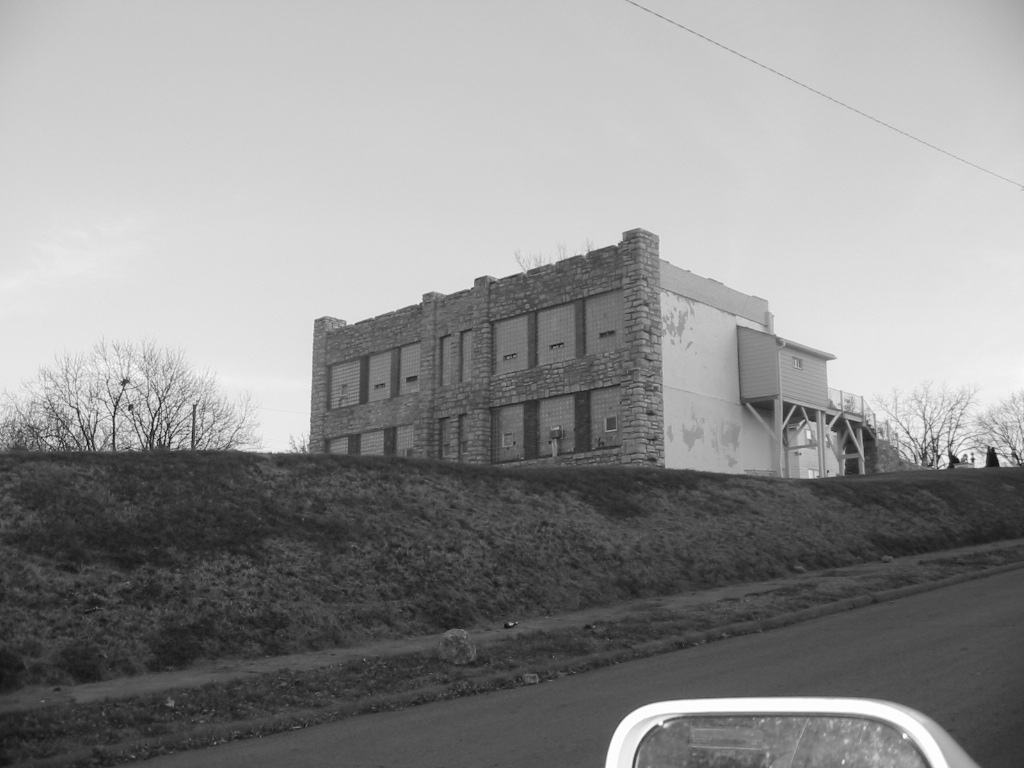
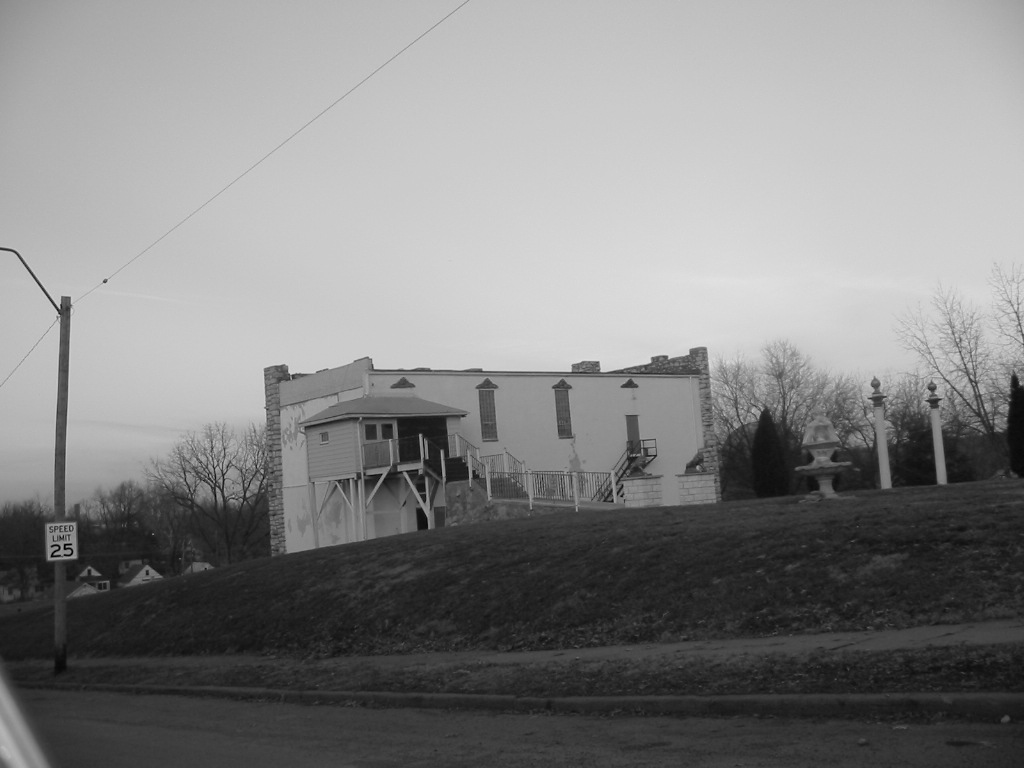
Well, today, the little Curmudgeons and I made what was probably our last outing on the Kansas City, Missouri Closed Church Tour. We drove by the sites where Ss. Peter & Paul, St. Mark's "Ecumenical Parish", and St. Joseph's once stood, and we visited the old buildings for St. Mary's / Immaculate Heart, St. Augustine's and St. John's Seminary.

Over the next week, I'll make three or four more posts, with only one or two stops that hold any architectural interest.

With only about a week's worth of posts to go on this tour (unless my Kansas City/St. Joseph readers chime in and start sending me pictures), I need to think about the next adventure. Feedback in my comment boxes and email (
curmudgeonkc@yahoo.com) suggests that the little photo tour is far more interesting to other people than my usual rants (except, perhaps, the Vatican II rant from December 11). What should I do?

I took this first picture on the way back home: Christ the King church on Wornall Road--an unappealing postwar church that has recently been made downright ugly by the addition of a horrible vestibule in the last year or so. This could be the beginning of a series on ugly churches in KCMO.

I took this picture on the same trip home. It's B.B.'s Lawnside BarB-Q. I could, if I wanted, take a break from ecclesiastical subjects and shoot barbeque joints around town. After all this is Kansas City. We could start with Gates or Rosedale, and build up through the various smoking hotspots to end at Arthur Bryant's and Oklahoma Joe's, the twin peaks of barbeque joints.


I took this picture as I drove by Brush Creek after shooting Immaculate Heart, on my way to St. John's Seminary. (Yes, it's an awful shot through my windshield, but I was in a hurry to get my rounds done before my little Curmudgeons lost patience). That building in the distance is the Stowers Institute, where embryos go to die (Jim Stowers, founder of the American Century Mutual Fund Company, is leaving all his millions to fund medical research, and from what you see and hear, a lot of it is morally illicit embryonic (or the new euphemism over the last few months is "early" stem cell research). It's interesting to see and hear people's moral quibbles wilt away when the Stowers people and their fellow travelers raise the prospect of big research money leaving town. Just down the road is the Hare Krishna Veda Center, which I didn't get a picture of. This could be my first picture in a tour of evil places in Kansas City, but such a tour would be morbid, perhaps scandalous. There's too many of them, and they might lead some to dispair, others to temptation.

What I'm more likely to do, though, is to either shoot some grand preconciliar churches on the Missouri side that aren't closed (Redemptorist, Sorrows, and Good Counsel for starters) or, as I've proposed before, shoot some of the beautiful old ethnic churches on the Kansas side.

We'll see what the next little project is as time goes on: but first, I need to get my post up on the three vacant sites I visited: Ss Peter & Paul, St. Mark's, and St. Joseph.

Friday, January 13, 2006

If we' re lucky, she'll be writing the appellate brief for the plaintiffs!

Thursday morning I was trolling Catholic World News and clicked on a Findlaw link, to Marci Hamilton's column in support of the Portland bankruptcy judge's determination that parish property was part of the Archdiocesan bankruptcy estate. Wow.

This Marci is a law professor at a respectable law school--Cardozo (in NY, at Yeshiva University). This Prof. Marci argues that the bankruptcy judge in Portland, Elizabeth Perris, was correct in ruling that the churches were property of the diocese and therefore properly included in the bankruptcy estate. She does so with the following "full disclosure":


In the Portland proceedings, I represented clergy abuse victims on the First Amendment and constitutional issues, as I do in many other jurisdictions. But the view expressed in this column are not advocacy; they are what I personally believe as an attorney and law professor.

So, this article isn't advocacy? This article contains the disinterested analysis of a law professor at a ranked law school? (she also claims to be a "consultant" on the Philadelphia Grand Jury Report). Am I going to be too hard on Prof. Marci? After all, charity calls for us to be forgiving of human weakness. But in this case, I'm not crossing a line. I don't think this scrawl is a product of "human weakness." After all, this woman isn't an in-over-her-head, gum-smacking journalist. As the lawyers I know will confirm, Prof. Marci makes her living grilling law students and claims to be a practicing litigator, or consultant to one. Despite her unfortunate first name, Prof. Marci's a big girl and she ought to know what she's doing. She can take this criticism.

In attempting to diffuse the presumption that the Catholic Church is "indigent," a word I've never heard a commercial bankruptcy lawyer use (and yes, I know a half-dozen of 'em—the proper term is "insolvent," dear), Prof. Marci asserts that "The Catholic Church in the United States has enormous resources, including much in commercial property." Of course, in the first week of a small law school seminar on clergy abuse cases, you figure out that the "Catholic Church in the United States" does not legally exist under ecclesiastical or civil law (much to the chagrin of the boys at the USCCB), and the concept is not legally or factually relevant to the Portland case. Each diocese is an independent local Church, not subject to any other diocese, not obliged to share property or personnel with any other diocese, and not subject to the dictates of any national body except in very limited circumstances. Therefore, the purported wealth of the Catholic Church throughout the United States is not relevant to the analysis of any particular case--only (perhaps) the purported wealth of the defendant diocese.

Prof. Marci says in the same paragraph that "it would take millions of clergy abuse victims before it would have to shut down parishes or programs to any significant degree." Lawyers I know tell me that Rule #2 on law school examinations (after Rule #1, watch the clock): do not base your conclusions or legal analysis on facts not stated. Lawyers tell me that Rule #11(b) in civil procedure (before Rule #11(c), sanctions) can be paraphrased as "allegations and factual contentions in pleadings must have evidentiary support." These are good rules to live by, even outside the narrow worlds of law school exams and litigation. On what basis to you base this grand conclusion, Prof. Marci? Do you have data to back up your assertion, or is it, perchance, gratuitous? Do you even have anectodal evidence? Test your assertion on the people of Boston, including the traddies who are about to get kicked out of Holy Trinity. Maybe closing the Boston Paulist Center wouldn't be significant (in the way you mean), but wiping out churches such as Holy Trinity and dozens of others like it is a "significant degree," and there ain't "millions" of claimants in Boston.

Prof Marci uses the term "Archdioceses" as a general description of the local Churches. This is a small point, forgivable in someone, even a Catholic educated after 1970, who isn't involved in the either the administration of, or the fleecing of, the Church. But Prof. Marci ought to know her enemy better: the proper generic term is "dioceses." In fact, the most relevant case to preceding the Portland ruling, the Spokane bankruptcy (which you failed to do more than mention, despite its particular relevance to this issue) is not an archdiocese.


Prof. Marci asks, "so why opt for bankruptcy, if not due to indigence?" She says it's to protect assets.

Full disclosure for me at this point: I agree with the Portland lawyer (whose article I can't find) and think the three bankruptcies were all damned foolish moves to make.

But a perfectly reasonable justification (in our current legal/economic milleau) for an entity to file for bankruptcy might be because unliquidated liabilities exceed assets, which they do in these cases (thanks to the contingent fee extortion practice of the smarmy plaintiff's bar) and a company needs to reach a global settlement those liabilities. Take, for instance, another victim of our legal system and asbestos hysteria, Johns Manville Co. They were able to reach a global settlement on their litigation and make the few legitimate cases and the thousands of garbage ones go away, and they're OK (I think they, like every other sizeable business, are owned by Warren Buffett now). Lots of other companies have done the same. I'm not familiar enough to know the details of the Johns Manville case, but I doubt very seriously that funds held by Johns Manville in trust for some of its constituents (i.e., its employee pensions) were forfeited to the bankruptcy estate. More on that below

Prof. Marci has a great two-paragraph excerpt in which she makes it clear that this isn't "about the victims and about justice" but it's about hating a Church that she knows next to nothing about, other than what she's read in Dan Brown novels:

Fortunately, though, the judge ruled the other way. And rightly so. The Roman Catholic Church, after all, is the longest surviving monarchy in history -- its top-down structure is hardly a secret. Indeed, a prime reason priests were ordered to be celibate centuries ago so as to ensure property ownership stayed within the larger church and did not devolve to their offspring. (In the early centuries of the church, priests could be female, and, whether male or female, could be married.)

Except for Vatican II, the 1970s encyclical [NB: in original; this was subsequently changed by the editor to "1960s ecumenical council"] that would have given the laity more power within the Church and which made services more informal, there has been little reason to think the hierarchy ever would have approved having church property land in the hands of parishioners. And Vatican II has not fared well in recent years or under recent Popes.

Then Professor Marci goes into the "independent ownership of parishes" schtick, with the specious argument that the archdioceses "could have made them independent if they wanted to," but completely ignoring the real issue in these cases of dioceses operating as corporations sole, which was that the property was held, not independently, but in trust by the bishop for the parish. Read her bit (before she gets into a rant about the irrelevance of canon law), and you don't see any mention of the argument here. Of course, it would have been too much to ask for her to consider the origins and justification of the "charitable immunity" rule in common law, the principles of which are relevant here.

Prof. Marci next goes into a section called "Baleful Consequences would have followed a ruling that canon law controlled property ownership." This brings up two points, off the top of my head. First is the notion that non-governmental laws or agreements aren't relevant to property ownership. If that's the case, then trade customs, written and oral contracts, and corporate by-laws, and partnership agreements, and even express trusts are all irrelevant and unenforceable, huh? The principle that private rules govern ownership between interested private parties can't be new to you, can it, Professor? For time immemorial, donors have given money and goods, and bishops have administered money and goods, according to the prescripts of canon law Canon law isn't some on-the-spot, artificial system (like, say, the limited liability company acts introduced to every state in the last fifteen years or so) that can be ignored out of hand, as you seem to want your readers to think. Canon law, Marci dear, predates American law, and the principles of equity from which the bankruptcy system developed from canon law. Canon law, like any "private" structure or agreement for another organization or relationship, is and always has been the proper vehicle for determining ownership between the larger organization and its constituents.

The second is that her warning that the uncertainty that determining property ownership from canon law would cost the church more money in the long run because it would cloud title. Our response has to be "Thanks for looking out for us Catholics, honey, but we'll hire a lawyer who's manifested competence and familiarity with the workings of the Church if we need legal advice."

"The Church doesn't have a right to operate in a universe wholly divorced from civil law, civil courts, or public accountability" says Prof. Marci. What about Separation of Church and State? Don't you believe in separation of Church and State, Prof. Marci? After all, it's in the Constitution, isn't it? What you're saying sounds more like subjugation of Church to State. I cannot believe that anyone in this country or anywhere would hold such a position. I simply cannot. After all, Separation of Church and State is in the Constitution, isn't it?

Anyways, that's enough. It's late and I'm tired, and as sloppy is this post is, I've obviously put more effort into it than Prof. Marci did her column. So let's wrap up:

Prof. Marci says the above isn't advocacy--it's just her opinion as an attorney and a law professor. She must be saying it's not advocacy because it's the sort of advocacy that would result in Prof. Marci having a "little talk" with her malpractice insurance carrier, or maybe the magistrate at a Rule 11 hearing. This column of Prof. Marci's (and I haven't read the others that she links to) demonstrates a shameful failure to engage in legal analysis and a painful-to-read lack of command of generally known and generally available information about the structure of the Catholic Church and the relationship between Church and state. This is the sort of vacuous analysis I expect to read in the pages of the Kansas City Star, or maybe even Pitch, or maybe hear on the Fox News, but it is not fitting for a law professor, even writing for a popular audience. It's an embarrassment to her colleagues at Cardozo, and if it were possible to embarrass this sort of plaintiff's lawyer, it would be an embarrassment to plaintiff's lawyers.

I guess, in closing, I could only say that (1) I hope that when the Archdiocese of Portland appeals this ruling, Prof. Marci is the one that argues it for the appellees, (2) I wish the Church's enemies were all so ill-informed and incoherent as is Prof. Marci. Were the former wish granted, the parishes would be safe, and were the latter one true, Britain would be a humane place to live, the French revolution would have failed, freemasonry would be eradicated, Europe would be Christendom, and we'd be buying our oil from Maronite, Chaldean and Coptic Catholics in Arabia and North Africa. Unfortunately for the Church, though, her greatest enemies—particularly those that have planted themselves in the hierarchy--are much wiser, and much more knowledgeable, than Prof. Marci.


Thursday, January 12, 2006

The secret to kneeling

I suppose the fact that it took me so long to figure this out--precisely, it took until last Sunday afternoon--indicates that I haven't spent enough time kneeling thus far in my life:

Duh. The secret to kneeling for long periods isn't the amount of cushion for one's knees--it's where one's feet are. I can more comfortably kneel on concrete for an hour if I'm on a step or something so that lower legs are straight and my feet are still below my kneecaps, than I can with a huge wad of cushion on a flat floor when my lower legs go back up to make room for my feet.

No, I obviously haven't spent enough time kneeling.

Monday, January 09, 2006

Random thoughts.

1. I watched the old Jimmy Stewart western Destry Rides Again, which I've always wanted to watch, ever since someone told me years ago that Blazing Saddles was, in large part, a parody of that film. Absolutely hilarious. I didn't realize what a good job Madeline Kahn did on Marlene Dietrich.

2. No additions to my closed church tour this week. Didn't get out this weekend, what with other stuff going on.

3. I need a post on the St. Anthony's/Assumption altar, which, I'm told, was recently acquired from a closing church in Pennsylvania and installed at the Bishop's request.

4. I continue to get stuff from the SNAP crowd. I guess I'm on their mailing list.

Sunday, January 08, 2006

Reparations for Redemption Rappers

Well, at about 3:50 p.m. this afternoon, approximately 100 or 110 people (I counted 102 and, judging from my accuracy in counting cattle, I'm sure I miscounted) gathered outside Blessed Sacrament in Kansas City, Kansas. before the "Rap for Redemption" started up. As you can tell, I broke the "no hothead" rule and decided to attend anyways. I figured it wouldn't hurt. After all, word had made it around and the "call to arms," as it were, was posted on the Remnant website and on Seattle Catholic at that point. Given that level of press, there was bound to be a greater hothead than me there.

I'd guess 2/3 of the people were from the Latin Mass Community that met at Blessed Sacrament; the other 1/3 were folks from St. Vincent's. Also present were the Fox affiliate, the NBC affiliate, and Channel 9 (I don't watch TV much, so I don't know which network they're affiliated with, together with some non-broadcast press folks.

I don't know how many people were inside. I just saw the story on Fox news, and it didn't look like many. People were coming and going all the time. Before we started, twenty-somethings were running around with TV cameras and notepads, trying to get a comment from us whacked-out old fashioned kook Catholics. The two laymen who organized the event, one from our community, and one from St. Vincent's, reminded everyone that we weren't here to speak to the media, and asked everyone not to identify them to the press. With cameras rolling and police officers milling about we started.


We were blessed, I suppose, with a little extra mortification. Just as we started, a front blew through and dropped the temperature from a balmy 59 degrees down to the windy low-40's. Many of the people were in sweaters or light jackets, so our offering of an hour of kneeling on concrete was supplemented, shall we say, by enduring a little biting wind and cold without being properly dressed. By the time I got back to the car, it was in the high 30s (I know I don't get any sympathy from Hilary and my Canadian or my Swedish readers on that point).

The FSSP chaplain had mentioned in the announcements before his sermon at the 10:45 High Mass, that he would be removing the Blessed Sacrament from the tabernacle following Mass, but without stating the reason why. He began the reparation itself just before 4pm, by stating the the three criteria for an act of reparation, i.e., a state of grace, a pious act, and a supernatural intention. He asked anyone who might not be in the state of grace to quickly make an act of perfect contrition, pointed out that our prayers were the act, and stated our intention to be that of reparation for what was going on inside.


Cameras from three or four television stations were rolling, and the twenty-something TV reporters were looking bored and disappointed. After the start of the second Joyful Mystery, they figured out that we were going to be "droning on" in the same way quite a while and went inside to see if anything "more interesting" was going on in the Sanctuary. By the time we started singing the Litany of the Saints in Latin (which is really the only thing that would have made good TV at this event), only one camera was left. After the litany, the concert was still going on, so we said the Joyful Mysteries a second time and got the chaplain's blessing before dismissal.

The chaplain, before dismissing us, reminded us that were didn't need to mill about and talk to anyone--that we should just go on home quietly. Everyone obediently did so, except for one young guy I didn't recognize (perhaps he was from St. Vincent's, with apologies to y'all over there if he was actually "one of ours"). As I drove off, past the church, THERE HE WAS, talking, with three cameras rolling. I hope, against hope, that he didn't say anything stupid.

Which makes me wonder....notwithstanding the fact that we were there to make reparation, not make headlines, if the organizers should have appointed a spokesman or at least handed out a printed statement to the media? The PR people (and at least a couple of PR people are members of our community) will tell you that it's better to give the press (particularly the idiot-box press) information, because otherwise, they'll just make it up. Instead of getting a concise statement of the truth--that we were making reparation for the defilement of our church and our sacred music by mixing it with repulsive, vulgar rythyms of the gang culture, and not because they were prisoners, or they were black, or for any other reason. If a Schola came from Lansing to sing real Gregorian Chant (or even better--early polyphony, like Palestrina, which is a rare treat for Kansas City Latin Massers), we'd be delighted--we'd be in there praying with them.

We'll, I guess I need to find an antenna for my TV, so I can see what this guy said. It's somewhere in my closet, I think. Or maybe it's in my basement.

Update 9:30 PM:
I just watched the 9:00pm Fox 4 news. It must be a slow news day--they were promo'ing the Rosary in the hour leading up to the news. It wasn't as bad as it could have been--right away, they said we weren't there because it was a prisoners' performance--and the guy (whose name I wrote down but won't repeat here) didn't say anything terribly foolish that made the cut for that segment. I did also notice that the close-up shot they used of the Rosary wasn't one of us unstylish laymen, nor was it of our chaplain, who was slunked down under his hat (he was one of the few with the foresight to be prepared for the weather). They shot our photogenic assistant chaplain--a handsome young fellow with nice hair. Of course, they followed and ended with some busibody sponsor of the event saying it the performance was all just "beautiful, beautiful" in response. Overall, the channel 4 take on this wasn't as bad as they could have made it. We weren't entirely made out to be a bunch of troglodyte clods. Of course, as is typical with the few TV news segments I've seen, one walked away knowing precious little more about the situation than one started with.

I started to watch the other channels, but gosh TV news is bad, and all the fancy computer graphics make me dizzy.

Saturday, January 07, 2006

More on "sacred" rapping in the local Latin Mass Community's church

Regarding a response to a Kansas City Outrage (below), I hear, through my sources, that some men (from both the St. Rose Philipine Duschene community, and from other traditional and orthodox groups around town, including St. Vincents) are getting together to pray the rosary together there at the church (outside the church) when this is going on, starting at about 3:45pm. The group is informal--not organized by anyone officially on behalf of the community--just some faithful, concerned men. Ground rules for the rosary group are--stay outside, no moms or young children, no vocal protesting, no signs, no talking to the press that might show up, and above all, NO HOTHEADS (after all, they'll have they're share of hotheads--prison guards, and whatnot).

I guess the "no hothead" rule disqualifies me from participating, but I suppose I should spread the word among any non-hotheads reading this blog (if any there are).

A sidebar addition, by popular demand

Several readers have requested that I add a sidebar to my blog indexing all the posts I've made on closed churches. I've done just that.

It was a nightmare getting it done, as I'm a technical incompetent. In the process, I lost my haloscan comment connectivity (I didn't lose the comments themselves. They're in the haloscan server, but I can't get them to show up on the blog. I'll have to work on that.

However, I now have an index to my closed church posts. As that list outgrows my sidebar, I may have to figure out how create a separate page for it, but that's at least a month away. I'll worry about it then.

Friday, January 06, 2006

A Kansas City Outrage

Seattle Catholic today picked up a story from the Kansas City Kansan, the Wyandotte County local paper, "Prisoners Rap for Redemption." At first I didn't even read it (having already had my fill of chaos and disappointment for the day by noon, when Seattle Catholic is usually updated). But when I did click the link, I discovered this wasn't some bad joke from a diocese notorious for such things, like Cleveland or LA or Johnstown-Altoona--this is in Kansas City, Kansas.

Apparently (as you can read for yourself if you click the link above), prisoners aren't just rapping on their own about things spiritual (which would, in itself, give offense to God by repeating his name in such a base and vulgar medium). They're actually going to mutilate existing sacred music. They're going to rap Kyries and Agnus Deis.

What's more, they're not going to do this in a prison room, or a secular auditorium, or even some far-out protestant or new-fangled Catholic church. They're going to do this at Blessed Sacrament at 4pm this Sunday, January 8, 2006.

Yes, that's Blessed Sacrament, at 20th and Parallel Parkway, where the Latin Mass Community of St. Rose Philipine Duschene meets. (Here I should point out to the out-of-towners that the Latin Mass Community is a tenant of the regular parish there, even though their numbers are greater, and therefore they have no control over what the regular parish does--and sometimes inadequate control of what the LMC itself can do. No doubt, the LMC community is livid about this.

As noted above, using a corrupt and debased form of "music," that arose out of urban gang culture, and is still associated with it, to praise the Almighty is an offense to Him. Debasing sacred songs--parts of the Holy Mass, and the musical structure that has its roots in pre-Christian worship of our Lord by the Jews and that has shaped and guided Holy Mother Church--and all western music--through two millenia is an offence to him. And of secondary importance, but noteworthy nonetheless, doing all this in a church that is used primarily (in terms of numbers worshippers, if not ownership) by Catholics committed to traditional worship--doing all this in their very refuge from the foolishness and corruption of modern liturgy--is a grave insult to those Catholics.

Who let this happen? Obviously, the pastor of Blessed Sacrament, whomever he is, did. (We can't blame the Latin Mass Community or its FSSP chaplain, and they don't have a voice). Does the Archbishop? If so, that doesn't speak well for the future of the Archdiocese of Kansas City in Kansas.

More importantly, what can we do? It's already Friday night, so there's little chance we can get the Archbishop to stop it, even if he doesn't have anything to do with it. However, those of you who live on the Kansas side really ought to let him hear about it on Monday, and on please pray for the people of the LMC and their chaplain, as this will be a temptation to wrath and a trial for them as they find out about it (as it obviously is for me).

Holy Spirit, Kansas City, Missouri

I didn't hold out much hope Saturday evening (and the day didn't hold out much more light) on my way home from St. Michael. The little Curmudgeon had played her trump card (i.e., "Daddy I have to go potty") in order to get herself home. But it was on the way, so I thought I'd see if there was anything left of Holy Spirit at 2500 Euclid Avenue, the Negro Catholic church from the days when everything in Kansas City was segregated. 2500 Euclid is south of I-70, near Bruce R. Watkins/US 71 highway.

As I got near, I saw, on the hilltop in the darkening sky, a huge church with a magnificent spire that wasn't on the day's list. I knew right away that it wasn't Holy Spirit, because we were several blocks away from where it was and I knew Holy Spirit was a poor little church--. I started to get excited, until I realized that
the church I was driving by was just Holy Name, which I've covered here and here, and which I didn't recognize because I was approaching it from a new direction, the east.

I passed Holy Name, went down Prospect, and reached 2500 Euclid. As you can see, where once stood a simple cinderblock church (from what I remember of the photo in the book) is now a vacant lot. All I saw on the lot (from my car) was an abandoned yellow side-by-side refrigerator. At least whoever dumped it had the decency to remove the doors so a kid wouldn't suffocate.

Since my little Curmudgeon had played the trump card (and since it was getting dark on New Year's eve and the house next door had all the markings of a crack house), I elected not to kick around the abandoned lot, and the reader will simply have to make do with the refrigerator picture.

As you can see, except for the happy discovery of an "unclosed" closed church at Assumption/St. Anthony's, Saturday's drive was not as architecturally interesting as my two trips in October and November. I've hit six of the 17 candidate locations I found last week, and with 11 more to go, I can tell that one or two are certainly torn down (one's address on mapquest is in the middle of the new US-71/Bruce R. Watkins Drive, and the other is downtown where an office building now stands) I hope that among the nine or so that are left, there's still something interesting to look at.

Thursday, January 05, 2006

A half-hour well spent with Tom Woods.

I just spent a half-hour watching an archived lecture by Thomas E. Woods, given at the Von Mises Institute recently, on Robert Nisbet, whom Woods places alongside Richard M. Weaver and Russell Kirk in the triumvirate of American traditional conservatives. Woods is a good speaker and his discussion of Nisbet's conservative argument against war, militarism, and the executive was a nice, concise exercise in laying out a respectable case against the status quo. I'd recommend that anyone with a little time watch it via www.lewrockwell.com. Click here for the Tom Woods page, and go to Conservatism's Führerprinzip, for either the video or the audio version. For complete access to all Tom Woods' presentations (some audio, some video), click here. I haven't listened to any of these others yet, but now I have something more intellectually profitable to do than blog, eh?

Woods' short lecture also inspired me to get out and flip through my old copy of John P. East's great little book of biographies, The American Conservative Movement, and, as when I hear any conservative academic talk, brought back fond memories of graduate school, where I wrote my MA thesis on two aspects of Richard M. Weaver's work, where I had a chance to read extensively from Russell Kirk, and where I discovered (with the help of a protestant or perhaps agnostic major professor) the work of historian Christopher Dawson. I must admit that I did not spend much time with Prof. Nisbet, though.

My memories of the MA program are not fond on the whole--the institutional and economic aspects of grad school were unpleasant--but I do reminisce about the two years I spent in my independent study and reading.

Wednesday, January 04, 2006

St. Stanislaus, Kansas City, Missouri


The parish of St. Stanislaus, at 6808 East 18th Street, was either never successful in building a regular church building (instead meeting in what looks like the beginnings of a school building) or it tore down the church at some point.

In This Far by Faith, there is a photo of people posing after one of the final Masses at St. Stan's and it appears to have been in this building. St. Stan's is now used as a spanish-language evangelica/pentecostal community of some sort, with a garish pair of gold-painted concrete lions greeting worshipers. I didn't stop to get good pictures of the lions because daylight was fading and I planned three more stops, but here's a picture of the church.

Tuesday, January 03, 2006

Thomas Becket, Ecclesiastical Corruption, and Intervention by the Civil State


Last week, it was reported that some British academic statist listed St. Thomas of Canterbury among the ten worst Britons of the last 1,000 years in the BBC History magazine. John Hudson, a professor at the University of St. Andrews, Scotland, said Becket divided England in a way that was "unnecessary and self-indulgent," and that "He was a founder of gesture politics with the most acute of eyes for what would now be called the photo opportunity."

Of course Becket divided England! He served as a great counterweight to the oppressive state, and that division kept the average Englishman living at a level of humble domestic prosperity for centuries. And that's why he is great saint for our times. Here's what the then-Protestant Chesterton said about St. Thomas in one of my favorite books, What's Wrong with the World (1910):

When four knights scattered the blood and brains of St. Thomas of Canterbury, it was not only as sign of anger but a sort of black admiration. They wished for his blood, but the wished even more for his brains. Such a blow will remain forever unintelligible unless we realize what the brains of St. Thomas were thinking about just before they were distributed over the floor. They were thinking about the great mediaval conception that the church is the judge of the world. Becket objected to a priest being tried even by the Lord Chief Justice. And his reason was simple: because the Lord Chief Justice was being tried by the priest. The judiciary was itself sub judice. The kings were themselves in the dock. The idea was to create an invisible kingdom, without armies or prisons, but with complete freedom to condemn publicly all the kingdoms of the earth. Whether such a supreme church would have cured society we cannot affirm definitely; because the church was never a supreme church. We only know that in England at any rate the princes conquered the saints. What the world wanted we see before us; and some of us call it a failure. But we cannot call what the church wanted a failure, simply because the church failed. Tracy [one of King Henry's knights] struck a little too soon. England had not yet made the great Protestant discovery that the king can do no wrong. The king was whipped in the cathedral, a performance which I recommend to those ho regret the unpopularity of church-going. But the discovery was made, and Henry VIII scattered Becket's bones as easily as Tracy has scattered his brains.
I suppose my point is that exactly because some twit academic Scots fascist reviles Becket as an advocate of something outside the reach of the state--something beyond and greater than the state--is why we should give Becket, and his fellow English martyr from a few centuries later, John Fisher, special veneration these days.

Too many Catholics--even orthodox and Traditional Catholics--cheer on when the state injects itself into ecclesiastical affairs. No matter how corrupt, how awful things are, the intervention of a civil government into the matter diminishes the Church. Better, perhaps, that a mob (quickly formed, quickly dispersed, of no lasting threat to the Church herself) solve the problem of a theiving bishop or a seminary or abbey "with tendencies" than the leviathan, the permanent presence with the ultimate power to coerce, interject itself into Church affairs. In Europe since the end of the first part of the Great War (or from the masonic revolutions in Italy, or the French Revolution, or from the "reformation," or from whenever) and in North America since the 1960s and 1970s (or before...point to your favorite reference), the state has exerted more and more control over her, sometimes in seeming benevolence (where it the taxes for the benefit of the Church in order to maintain her physcial structures) sometimes in more directly adverse ways (by threatening to tax the Church out of existence or fine and jail its clergy when they speak out against fashionable sins).

When some reprobate wearing the mitre brings shame to his office, many Catholics, of the sort that know better, are too quick to cheer that the government steps in when ecclesiastical superiors fail. They were happy, for instance, when the Maricopa County DA interjected himself into the governance of the Phoenix diocese under O'Brien's malfeasance, and they cheer on when the plaintiff's bar extracts money from one corrupt diocese after another, stupidly failing to see the obvious--that this imposes additional suffering on the flock instead of justly punishes the shepherd. They fail to see that the harm done by those government intrusions will ultimately be worse for the Church than the ecclesiastical malfeasance itself. Becket saw more clearly. John Fisher saw more clearly. Recall that the despoilation of the monasteries and the destruction of Catholic England occurred on the pretense of fighting corruption.

Then again, an obvious practical problem with Becket's view of the Church, as framed by Chesterton, is that there are very few Beckets, or even potential Beckets, among the servants of the servants of God. We can all name no more than a handful of them in the North American church. Fred Henry of Calgary, of course, and Burke, Bruskewitz, Doran, might rise to the occasion, plus we could all round out our half dozen with a couple of other names which we might disagree on, but the pool is still pretty small (maybe Chaput, Olmstead, etc). Very few men in the hierarchy have demonstrated the mettle to be a judge of the world. But of course, as Chesterton goes on to say, we can't disprove that a system where the Church outside the state--that there was true separation of Church and State, in that the Church was not subject to the State, would work. Perhaps the Pontiffs of the twentieth century would have been more diligent in their episcopal appointments if bishops had a more practical, temporal role in society. Perhaps such men would rise to the occasion, and weak men have when finally put to the test in episcopal and papal office. We can only speculate, and hold out that the world might be better if it stood as a counterweight to the state.

But I digress.

Ahem.

Might I suggest that you go over to Hilary's post on omens for what folks with more perspective may someday see as the beginning of the second dark ages. Click here.

St. Stephen's, Kansas City, Missouri


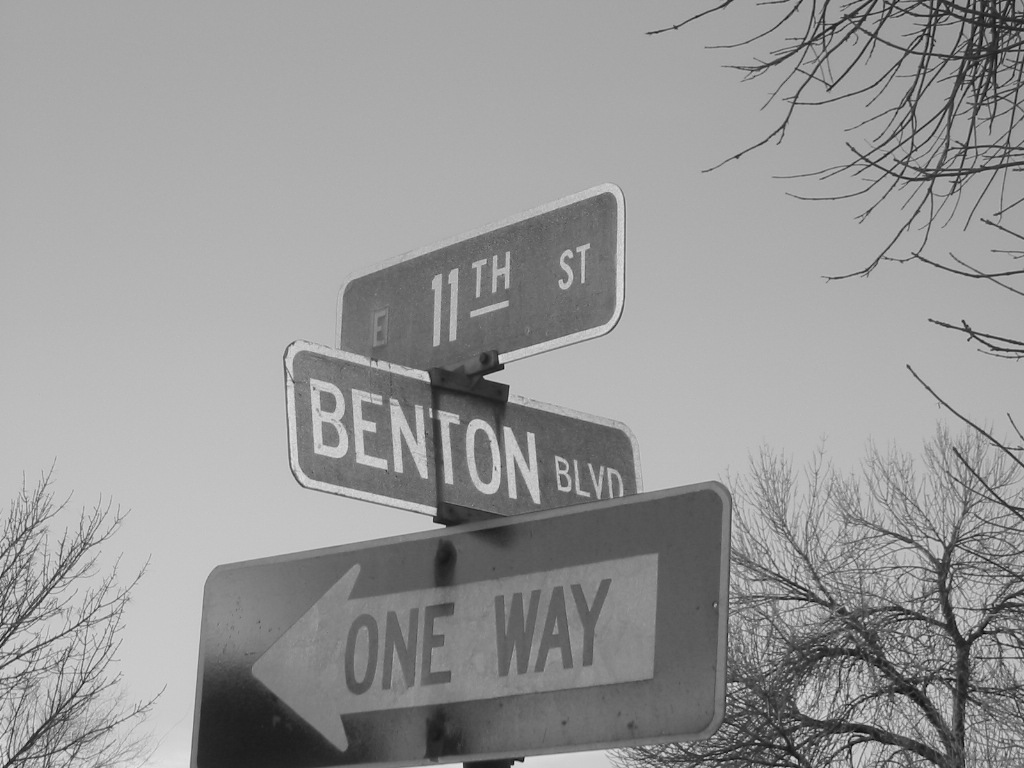
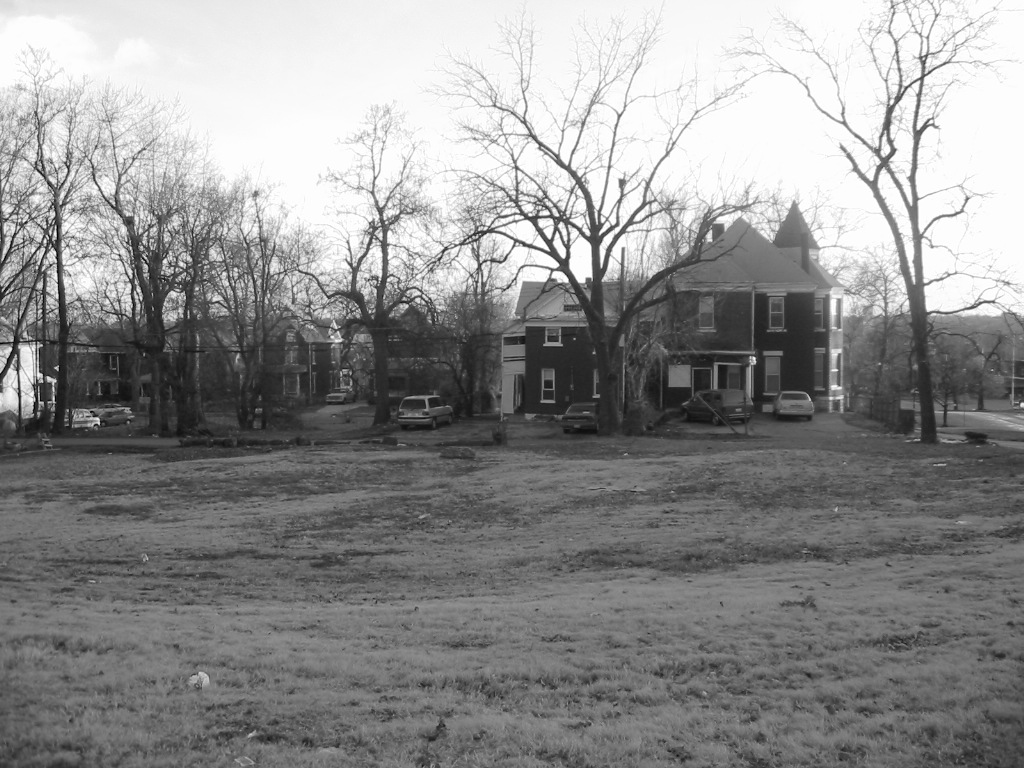
St. Stephen's was at the intersection of East 11th & Benton Boulevard. This Far By Faith didn't indicate which corner. Judging by the age of the buildings on the other three corners of the intersection, St. Stephen's must have stood in the empty lot shown.
I didn't linger long at this corner. Most of the churches I've shot over the last several weeks have been in deteriorated neighborhoods--places where soccer moms don't take their minivans. However this is the first place I really felt unsafe--the first place I wish I hadn't taken my daughter. Was it the folks stumbling drunk up the street towards us? Was it the run-town tavern across the street? Was it the loose, mangy dogs? Maybe a little of all three. I'll see what more I can learn by spending a little time in This Far by Faith once I get my checkout copy from the library.

UPDATE February 23, 2006

Well, it turns out that the vacant lot isn't St. Stephen's at all. It's just a vacant lot. I wrote down the wrong address. St. Stephens, now Our Lady of Peace consolidated parish, is at 1029 Bennington, not 1029 Benton. Oops.

St. Stephen originated with a land purchase by Bishop Hogan in 1888. A frame church was built at another location, moved to the present site, and burned to the ground in 1913. The cornerstone for the present church was laid in 1919. Due to donated labor from the men of the parish, the church was built for only $50,000. The church, which I need to get a shot of, is French Gothic with varigated stone towers. The main altar and communion rail were built later--befinning in 1934. The growth of the parish continued past 1959, when a new school was built, and the decline began before 1970, when the school enrollment fell below 200.

In 1972, the parish used funds from the sale of a couple of houses donated to the parish, to redo the interior. I haven't been in this church, so I don't know how bad a job they did, but This Far by Faith reports that ther were "Wall hangings, 18' feet [sic] in length, were designed for the space above the baptistry and were changed wit hthe seasons. " I think that's enough to let the imagination go. An interior shot from before the renovation is above.

St. Stephens, St. John the Baptist, and Holy Trinity were combined in to Our Lady of Pease on February 4, 1991.

Monday, January 02, 2006

Great idea from Charles A.


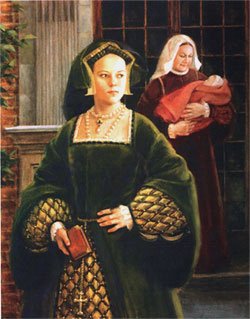
Charles A., who's killing time in the Cave on this Feast of the Most Holy Name of Jesus, having read my Dec 27 post on the waiting room TV, and perhaps my Dec 22 post on the Jacobite rising dream, has a great idea for a new dream sequence: Tudors meet TV characters.


I'll give it some thought . . . Next up on Montel: a man finally comes to terms with his own infertility and the sexually transmitted disease that caused it.

Following Montel, Mary, Queen of Scots confronts Elizabeth on the Jerry Springer Show. We'll see if either loses her head, or at least bares her breasts.

Finally Mary Tudor and Stephen Gardiner and go head-to-head with the English nobility on Judge Judy over the ownership of monastic lands.

(and Oh, to think of the commercials you could do!!!)

Assumption / St. Anthony's, Kansas City, Missouri


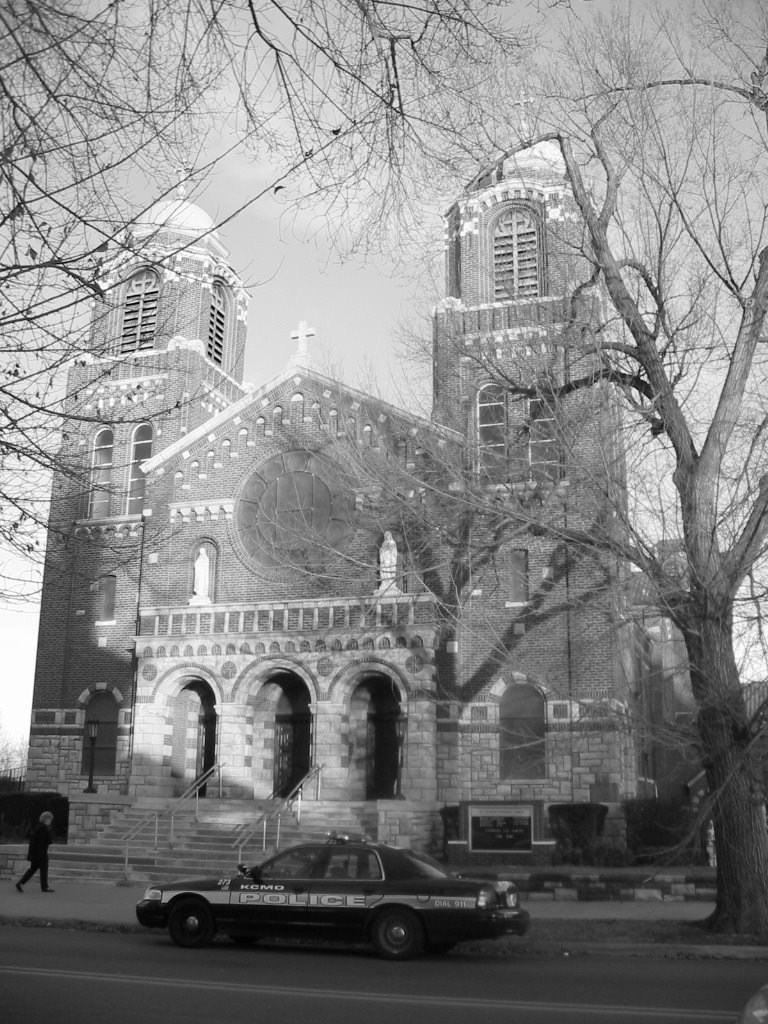
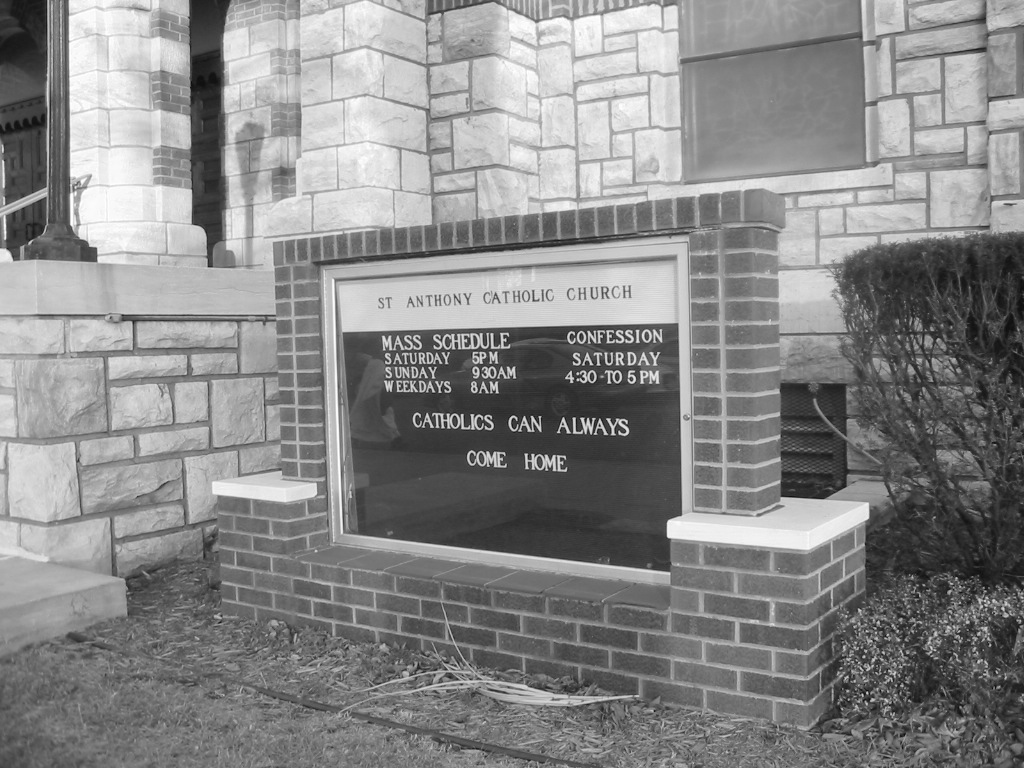
A pleasant surprise at my second stop on the closed church tour yesterday: As I said, I had about 17 candidates left, and my first stop was St. John the Baptist, now the local Don Bosco center. My second stop was only a dozen or so blocks away, at Assumption Church, in the Scarritt Renaisance neighborhood at Bennington and Lexington. I didn't recognize Assumption as an active parish in my cursory This Far by Faith research, and the KC-SJ diocesan website didn't list it as a parish, so I expected to find an empty building--or one overtaken by heretics. Instead, I found that the church was still in use, but had been redesignated St. Anthony's.

When I arrived with one of my little Curmudgeons in tow, it was a bustle of activity. It was about 20 minutes before the Saturday evening vigil Mass was to start (novus ordo, of course), and there were four police patrol cars stopped outside with lights a' flashin. It turns out the cops didn't have business at the Church--they had coincidentally stopped a van there, and they were behaving as if something more than a traffic stop were going on. Either they had a suspect for a more interesting crime, or they were just bored and got together to rough up some unfortunate. Given that they were in front of an open church on a busy street, I will assume that their reason was the former, and not the latter. At least that's what I told my little Curmudgeon as she repeatedly asked "Daddy what are those men doing?"

Because the church was open, we went peeked inside, and said a short prayer
before the Blessed Sacrament, and we received another pleasant surprise. The high altar and side altars were still intact, and (except for some minor, easily corrected stuff, like cheap, indoor-outdoor carpet and fans bolted under each of the stations of the cross) the whole building was in respectable condition.

The altar was a typical Kansas City altar: neoclassical/baroque, in a similar style, if not size, as one sees at Our Lady of Good Counsel or Sorrows or any number of other churches of the early twentieth century. In the niche where one usually finds the crucifix on that sort of altar, there was the Child of Prague, so I'm sure my little Curmudgeon thought I was speaking of that instead of the sacred species when I pointed to the tabernacle and told her to "say hi to Jesus."
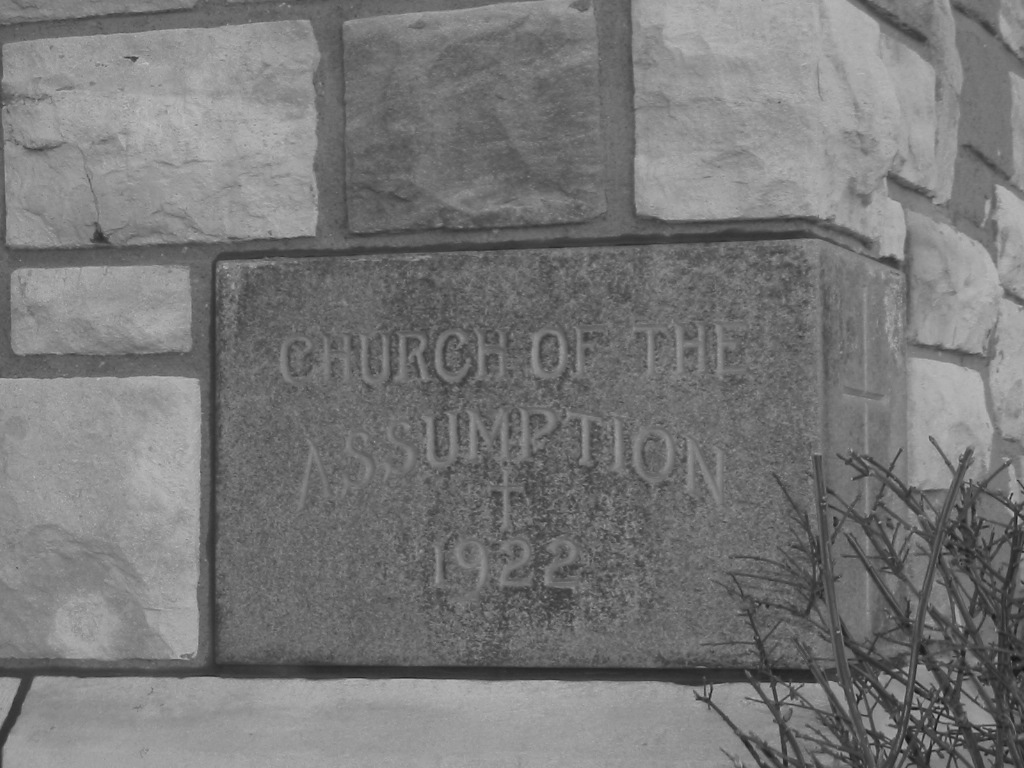
We only stayed inside a couple of minutes, as daylight was scarce, and when we came out, an older man in a modern, white chausable (polyester?) was talking to the police across the street. This is just my guess: he's a priest. He gave me a funny look when I crawled up by the bushes to take a picture of the cornerstone, then walked my daughter across the street to get a facade picture, but didn't ask any questions. I just said "Good evening Father" and waved. "Hello," he responded. I'm sure that, had he not been dealing with some major police action outside the door of his church, he'd have been more suspicious of me.

This neighborhood is very interesting. It's surrounded by blight and poverty, but the houses are--or were--remarkable. They appear to be 20 or 30 years older than the houses in my own neighborhood (late 19th, rather than early 20th, century). For the most part, the ones directly across from the Church are kept up, although not terribly well.

It's wonderful to see a beautiful old church building still in use. I would guess, from proximity, that the folks at St. John's were folded into Assumption to become St. Anthony's, and it's a relief that in the supposed merger, the people stayed in the more suitable building.

After we got back into the car and I got the little Curmudgeon buckled in, I wondered, why didn't I take a picture of the interior? No one would have minded, but it's just not something I thought of doing, it being an active church with the Host reserved in the tabernacle.


UPDATE
01.06.06 - 11:23 am Curmudgeon »
I was just told by a reader that the altars here aren't original: they were acquired from a closed church in Pennsylvania, and they had been installed in the last few weeks. Rumor has it that Finn is insisting that older churches restore their traditional furnishings so that they look like older churches--that they take down the Star Trek props and restore the traditional altars, rails, and other furnishings as they should be.


UPDATE
02.11.06 - 8:00am
CLICK HERE FOR PHOTO OF NEW HIGH ALTAR FROM OUR DISSIDENT-RUN DIOCESAN NEWSPAPER.

UPDATE
02.18.06 - 11:00pm
OK, kids, as you can see, the altar isn't original; it's a restoration. God Bless Bishop Finn for "encouraging" this sort of thing.

The parish was founded in 1909. The cornerstone of the current church (designed by Checker Dean as a combination of Mission and Romanesque styles to match other development in the neighborhood) was laid in October 1922, and it was built with reinforced concrete and fire-proof steel girders (they didn't skimp like so many other parishes did). Inside, the interior was finished by Dante Cosentino. All that work was undone in a 1967-68 project and subsequent renovations in which the walls were painted over, the altar torn out, and the sanctuary was completely undone. To the side is a picture of the interior as it was before the recent restoration.

In 1991, as you noted in my posts on St. Francis Seraph and St. John the Baptist, these two parishes were consolidated with Assumption at the Assumption site to form St. Anthony's.


Sunday, January 01, 2006

New Year's Blog Resolutions

Nursing a headache today. No, not the typical New Years' Day headache. I only had one glass of wine with dinner last night and I went to bed at 9:30--it's sinuses, made worse by incense at Mass this morning. Note to self: when my sinuses are bothering me, I need to go to low Mass.

Anyways, I have some short-term and intermediate goals (spiritual and temporal) for next year, but no formal "resolutions" in my real life. However, I've made a couple of blog resolutions. Here they are, with the introductory caveats that (1) they're not very interesting, and (2) their fulfillment is, as always, subject to the demands of making my living and raising my family (which Mrs. Curmudgeon seems to think rather important):

1. Get back to posting information about the clergy abuse plaintiff's bar and their attempts to rob the flock instead of punish the derelict shepherds.

2. Go back to my hate mail from the SNAP crowd a couple of weeks ago and make an interesting post of it.

3. Finish my series of posts on closed churches in Kansas City, Missouri,

4. Start a series of posts on churches in Kansas City, Kansas. For those, I might feature open churches (because, from the meeting I hear are going on, some of them might soon be closed, and also because the way KCK (or as we call it here in KC, the 'Dotte, for Wyandotte County) developed as a collection of immigrant neighborhoods, clearly segregated by ethnicity, each with their own churches only blocks apart (Croat, Slovenian, Polish, Slovak, German, Baltic, Russian, etc.) should make it an interesting history.

5. Add a blogroll and a few other features to my site, including perhaps an index to my church posts.

6. Make at least a minimal effort at editing future posts, instead of posting stream-of-consciousness, typos and all.


I could go on, but that's enough. If I stick with this blog and actually accomplish all these tasks I'll make some mid-year resolutions, or more likely, I'll just stumble along, month-to-month.

Saturday, December 31, 2005

St. John the Baptist, Kansas City, Missouri

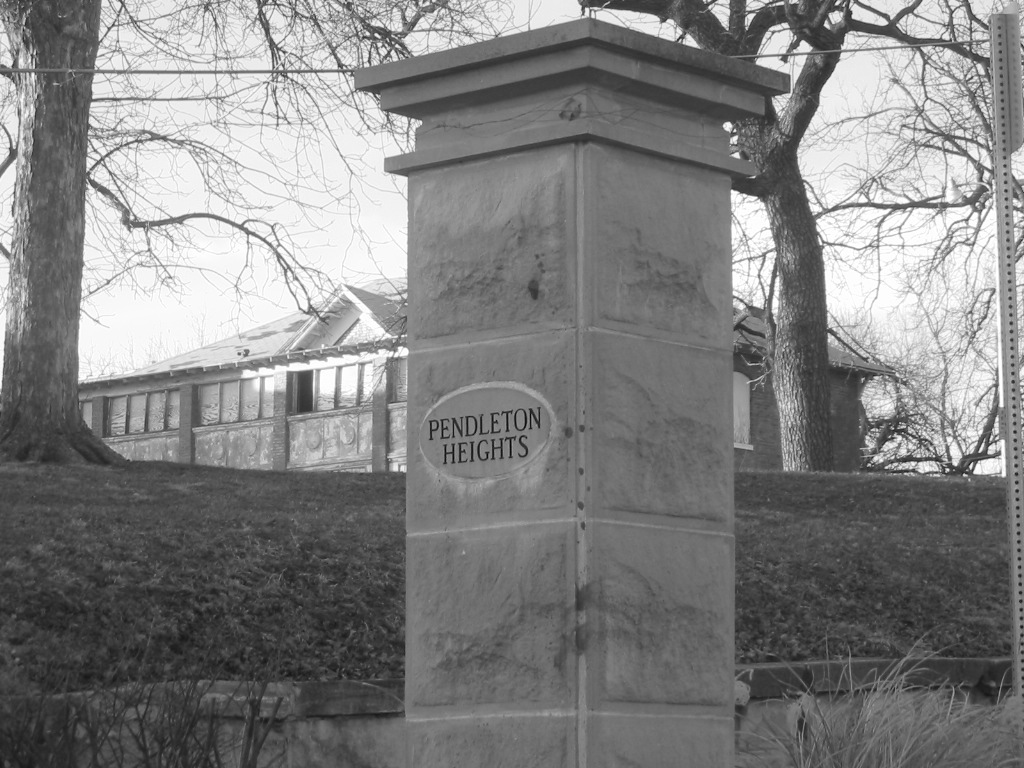
St. John the Baptist, in the Pendleton Heights neighborhood at 531 Garfield, is no more. In its building is the Don Bosco center of Kansas City (no, the place wasn't crawling with Salesian priests).

Judging from its location, St. John the Baptist was probably folded into Assumption/St. Anthony's, which we'll look at tomorrow. As you can see from the photo, the closure involved no great loss of an architectural treasure. No cornerstone was apparent.

If there was ever a beautiful church at this site, it's obviously been torn down.
In fact, the good people of St. John the Baptist, if they did indeed get moved to Assumption/St. Anthony, landed in a place much more suitable for Catholic worship.

When I do get more time in This Far by Faith, we'll all know more.


UPDATE FEBRUARY 19, 2006.
The parish was founded in 1882, and the original church was built immediately at 1436 Independence Avenue. There was an addition of 32 feet to the nave (at a cost of $2300. In 1913, the original church was renovated, and it was frescoed by the O.J. Kover company after 1915. As populations shifted, most of the folks were living east of the Paseo. In 1954, the original church, shown below, was closed, and eventually, it was torn down in a widening of the Paseo. The parish met in the school chapel at the site shown above, and in 1959, the school gym was converted into the church (those of you who said, "Oh boy, another church that looks like a gym," as you were reading above, there you have it.

The parish was struggling to make ends meet, and the parish was partially depopulated in the mid-1960s by the construction of the Osteopathic Hospital (causing 200 families to leave when their homes, over four square blocks, were cleared) and the Garfield Urban Renewal Project, werein 10 percent of the dwellings in the parish north of Independence Avenue were condemned and razed. The church was renovated in 1968 to better reflect the Spirit of Vatican II. In 1991, the parish was supressed and the parishioners were sent to the new Queen of Peace parish at the old St. Stephen's site. The parish complex was sold to the Don Bosco Center for $350,000.

Friday, December 30, 2005

A Kansas City "Ecumenical Parish?"

Inspired as I was after lunch today with a friend, I extended my lunch and ran over to the Kansas City Public Library Central Branch, where I flipped quickly through This Far by Faith once again, this time with the object of identifying additional Kansas City parishes that have closed and getting some addresses.

I wrote down about 20 candidates (not including those which I've already covered), and this evening compared my list to the diocesan parish list online. Seven were still listed as in use; 13 are closed. I'll try to sneak away this weekend with my camera (and probably at least one little Curmudgeon in tow) and get pictures to post. Then, when I have time, I'll go back and review the entries that Fr. Coleman compiled and add little snippets to the blog.

Once I've done these 13, I'll see what I can learn about closed churches on the Kansas side (I only know of two or three right now).

But here's the point of my post: One thing I did see in This Far by Faith, and I took time to skim, was an eye-opener from the days of Bishop Helmsing. You've heard about "ecumenical" parishes here and there--most recently in Germany--where Catholics and heretics share facilities and even have common services. You say "that would never happen here?" You're wrong! In 1966, Bishop Helmsing permitted St. Mark's inner city ecumenical parish to begin operating. The "community," shall we say, was a joint effort with the Episcopalians, the United Presbyterians, and the United Church of Christ. In 1967, Bishop Helmsing heard from Rome: the Holy Office objected. However, Helmsing let it continue over Rome's objections until sometime around 1973, when the "Catholic" involvement in the project finally dwindled to nothing.

This story makes me very curious about Bishop Helmsing. I wonder where one can get the unofficial history--i.e., the real scoop--about what was happening in the diocese in the late 60s and early 70s.